
A woman enters the home of a long-time friend who has suffered with an illness for sev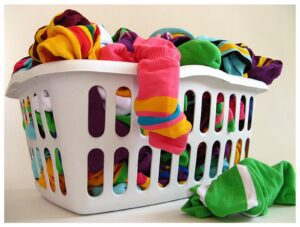 eral years. The house is a mess. The shut-in had tried to keep her friend away and had been quite successful until her friend’s insistence could no longer be resisted. In her last desperate attempt to keep her friend from seeing her dirty house, she told her of the dirty house and begged her not to come. It wasn’t that she didn’t want to see her friend, the visit would be a great joy, she was sure. No; it was the embarrassment of her dirty house and her inability to clean it in her sickly state. For the sake of cat hair, dirty socks and a sink full of dirty dishes, this woman was willing to sacrifice her friends love and attention.
During Jesus’ time, the Jewish community thought themselves unworthy, and so they were, as we all are. Not one was found capable of living the Law. The most successful people in the Biblical community were the Pharisees and Sadducees, but even they fell far short of the mark. They spent their time trying to make themselves clean by following all the rules and making all of the appropriate sacrifices. The very best of them would go to God in the Holy of Holies once a year. The hope was that if the priest had lived his life perfectly that God would then accept the sacrifice he brought from the community and would not strike the priest dead. The message communicated to the people is that you have to clean up your lives before you approach God.
Therein lies the catch twenty-two; who is able to live their lives so perfectly that they are justified to stand before God? Even the thought that one could do so is wrought with the very sin which plagues Adam and Eve.
St. Paul, in his letter to the Roman’s and elsewhere, reminds us that those who rely on The Law, and their own ability to live it, will die by the Law. In other words, those who rely on their abilities to clean up their act, to pick up all the dirty socks and cat hair in their lives, will fall short of the mark, and absent God’s grace will have nowhere to turn. This is the theology Paul struggles to share with the early church and the Jewish community who continues to resist. We want to do it our way.
So, the story of salvation ends this way, “Come, And let him who hears say, Come, And let him who desires take the water of life without price.” Rev. 22:17.
So, pick up as many dirty socks as you can, vacuum as much of the cat hair as you can, and wash as many of the dirty dishes as you can, but never let the incomplete job discourage a single visitor, because in showing hospitality to strangers, some have entertained angels, like Mary and a babe in the manger.
Father Bill Myrick
